
The Ultimate Guide to IPTV vs VOD in 2025
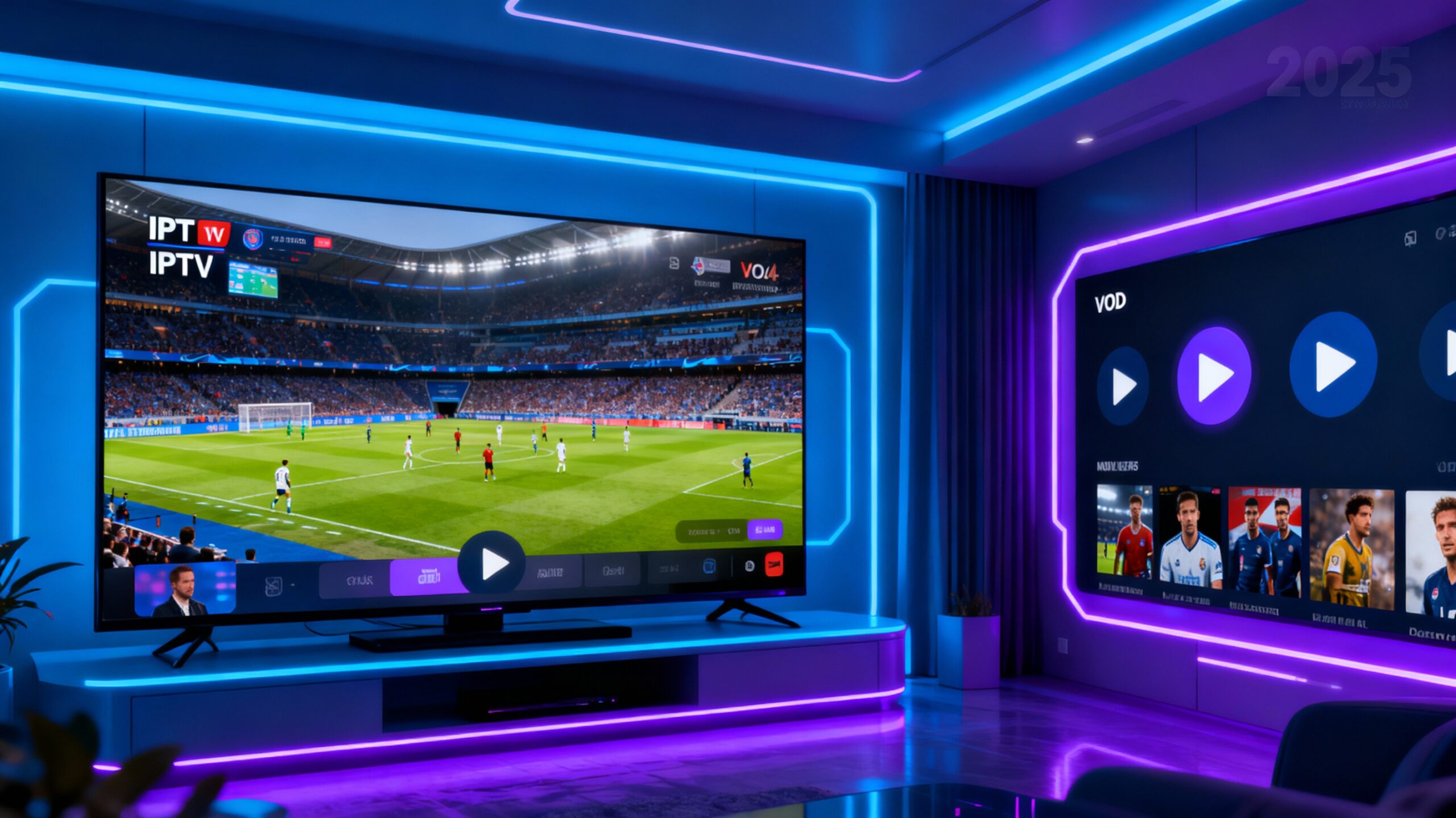
IPTV vs VOD is the most critical comparison for modern entertainment enthusiasts looking to cut the cord this year. As traditional cable continues to decline, understanding the distinct advantages of IPTV vs VOD has become essential for choosing the right streaming setup for your home. Whether you prioritize live sports events or binge-watching complete TV series, the debate of IPTV vs VOD ultimately comes down to how you prefer to consume your digital content.
Understanding the Core Technologies: How They Work
To make an informed decision, we must first dismantle the technical infrastructure that separates these two giants. Internet Protocol Television (IPTV) and Video on Demand (VOD) utilize the internet to deliver content, but their delivery mechanisms are fundamentally different. This difference affects everything from bandwidth usage to playback control.
IPTV streams content continuously in real-time. It functions similarly to traditional cable but uses IP packets to transmit data. When you watch a live channel, you are joining a multicast stream that is happening at that exact moment. This is why IPTV is the superior choice for live events, news broadcasts, and sports tournaments. The data is pushed to you as it happens, requiring a stable and consistent internet connection to prevent interruptions.
In contrast, VOD is a unicast technology where the content is stored on a server and accessed at your convenience. When you select a movie on Netflix or a stored series on a private server, you are initiating a discrete connection that downloads or buffers the file specifically for you. This architecture allows for greater control, such as pausing, rewinding, and fast-forwarding without the constraints of a live broadcast schedule. In the context of IPTV vs VOD, VOD is far more forgiving of bandwidth fluctuations because it can buffer content ahead of time.
For users new to these concepts, our comprehensive guide on how IPTV works provides a deeper dive into the packet switching technology that makes live streaming possible over the internet.
The Content Battle: Live Broadcasting vs. Static Libraries

The most significant differentiator in the IPTV vs VOD discussion is the type of content each format prioritizes. IPTV is designed to replace the “appointment television” experience. It excels at delivering linear content—programming that adheres to a schedule. If you need to watch the Super Bowl, the World Cup, or the 6 PM news as it airs, IPTV is your only viable option among the two. It replicates the cable experience, providing Electronic Program Guides (EPG) that show you what is playing on hundreds of channels simultaneously.
VOD, on the other hand, is the king of archival content. It offers a static library of movies, documentaries, and TV shows that have already aired. The primary advantage here is depth. While an IPTV channel might show a marathon of “The Office” on a Tuesday afternoon, a VOD service allows you to start from Season 1, Episode 1, and watch in order whenever you please. The library doesn’t change based on the time of day; it waits for you.
However, the lines are blurring. Many premium services now offer hybrid models. When you check our premium pricing packages, you will often find subscriptions that bundle thousands of live IPTV channels alongside a massive VOD library containing the latest movies and series. This convergence suggests that the winner of IPTV vs VOD might actually be a service that combines both.
Cost Effectiveness Comparison in 2025
Economics plays a massive role in the cord-cutting revolution. When analyzing IPTV vs VOD strictly from a financial perspective, the pricing models can vary drastically. VOD services typically operate on a subscription model per platform. To get a comprehensive library, a user in 2025 often needs to subscribe to multiple giants like Netflix, Disney+, Hulu, and Amazon Prime. This fragmentation has led to “subscription fatigue,” where the total cost of VOD services can easily exceed $80 or $100 per month.
IPTV services generally offer a more consolidated pricing structure. A single IPTV subscription often provides access to channels from around the globe—including sports packages, movie channels, and international news—for a flat monthly fee that is significantly lower than the combined cost of multiple VOD apps. This is often referred to as the “bundling advantage”.
Furthermore, VOD often involves transactional costs for premium releases (TVOD), where you pay per movie. IPTV rarely charges per view; instead, you pay for the pipeline of channels. For budget-conscious viewers, the IPTV vs VOD calculation often tilts in favor of IPTV due to the sheer volume of content provided for a single price point.
Comparing IPTV vs VOD User Interfaces and Experience
The user experience (UX) is where the difference between these two technologies becomes tangible. If you are migrating from a traditional cable box, IPTV will feel very familiar. The interface is typically centered around an EPG (Electronic Program Guide), which displays a grid of channels and time slots. You surf channels by flipping up and down, a mechanic ingrained in TV culture for decades.
VOD interfaces are radically different. They are tile-based and algorithm-driven. When you log into a VOD platform, you are greeted with recommendations, “continue watching” lists, and curated categories. The experience is about searching and browsing rather than “tuning in.” There is no schedule to consult; the interface is designed to keep you engaged by offering endless choices of static content.
One common issue with IPTV interfaces is the potential for buffering if the server is overloaded during high-traffic events. Because the stream is live, there is less room for error. If you encounter playback issues, we highly recommend reading our guide on fixing IPTV buffering to ensure a smooth experience. VOD interfaces generally suffer less from this because they can pre-load data, making the navigation feel snappier on slower connections.
Device Compatibility and Hardware Requirements
In 2025, hardware compatibility is vast for both categories, but the setup processes differ. VOD apps are ubiquitous. Almost every Smart TV comes pre-installed with YouTube, Netflix, and Prime Video. Accessing VOD is often as simple as pressing a dedicated button on your remote.
IPTV, particularly third-party services, often requires a specific setup (“sideloading”) on devices like the Amazon Firestick, Android boxes, or NVIDIA Shield. While not overly complex, it does require a bit more technical know-how than simply logging into an app store. You often need to use a “Downloader” app or configure an IPTV player like TiviMate or Smarters Pro to handle the stream URLs.
For a detailed walkthrough on getting your hardware ready, consult our specific Smart TV setup guide. If you are unsure if your current hardware can handle high-definition live streams, check our resource on device compatibility to see which boxes perform best in the IPTV vs VOD arena.
Bandwidth and Internet Speed Demands
A crucial technical aspect of the IPTV vs VOD comparison is internet consumption. Live IPTV is unforgiving regarding internet stability. A 1080p or 4K live stream requires a constant, uninterrupted bit rate. If your speed drops for even a second, the live feed freezes or loops. There is no “downloading ahead” in a strictly live environment.
VOD is much more efficient with bandwidth management. Adaptive bitrate streaming allows VOD players to lower the quality dynamically if your speed drops, keeping the video playing without stopping. Furthermore, VOD allows for downloads. You can download a movie to your tablet on your home Wi-Fi and watch it offline on a plane. This offline capability is a feature strictly unique to VOD; you cannot “download” a live IPTV channel to watch later without a recording setup (DVR).
Therefore, users with spotty internet connections in rural areas often prefer VOD or require a robust IPTV service that offers catch-up features. If you are facing connectivity issues, sometimes the solution is not changing your provider but optimizing your network for the specific demands of IPTV vs VOD protocols.
Why Hybrid Solutions Are Winning the Market
Ultimately, the strict separation of IPTV vs VOD is vanishing. The market has realized that users do not want to choose between the big game and a movie night; they want both. The best IPTV providers in 2025 are hybrid services. They provide M3U playlists that contain thousands of live channels (IPTV) and huge directories of movies and series (VOD) accessible through the same application.
This convergence offers the ultimate convenience. You can watch the live news in the morning, switch to a live football match in the afternoon, and then pull up a movie from the VOD section in the evening, all without changing apps or HDMI inputs. This all-in-one approach is the driving force behind the popularity of modern streaming services.
If you are ready to explore a service that bridges the gap between IPTV vs VOD, offering high-reliability live streams alongside a rich on-demand library, visit our support page to get started or ask specific questions about configuring your hybrid setup.
FAQ: Common Questions About Streaming Formats
1. Can I use the same app for both IPTV and VOD?
Yes, most modern IPTV players (like IPTV Smarters, TiviMate, or XCIPTV) support both protocols. When you log in using your credentials (usually via Xtream Codes API), the player automatically separates the content into “Live TV,” “Movies,” and “Series” sections, allowing you to switch between IPTV and VOD seamlessly.
2. Which requires faster internet: IPTV or VOD?
Generally, IPTV requires a more stable and faster connection. Because it is a live stream, it cannot buffer large amounts of data in advance. VOD is more flexible and can function better on slower connections by buffering ahead or adjusting quality dynamically.
3. Is 4K quality better on IPTV or VOD?
VOD typically offers better and more consistent 4K quality. Live 4K broadcasting (IPTV) requires massive bandwidth and real-time encoding, which can sometimes lead to compression artifacts. VOD files are pre-encoded for maximum quality, ensuring a pristine 4K image if your internet supports it.
4. Do I need a VPN for IPTV vs VOD?
While reputable VOD services like Netflix do not require a VPN (unless you are region-hopping), it is highly recommended for IPTV. Internet Service Providers (ISPs) often throttle live streaming traffic. A VPN prevents this throttling and protects your privacy, ensuring a smoother buffer-free experience for both formats.
5. What happens if I pause a live IPTV stream?
Unlike VOD, pausing a live IPTV stream is dependent on the player and the service’s “Catch-up” capability. If the service supports Catch-up or Timeshift, you can pause and resume. If not, pausing might only hold the frame, and when you press play, it will jump to the current live moment, skipping what you missed.
Related IPTV Tools & Legal Services
For more information on streaming tools and legal alternatives, you may visit the following resources:
Interested in IPTV Lifetime?
Get premium IPTV lifetime access with 25,000+ channels and 26,000+ movies. Contact us to learn more about our lifetime IPTV subscription plans.
View IPTV Lifetime Plans