
IPTV vs Kodi: The Ultimate Guide to Making the Best Streaming Choice in 2025
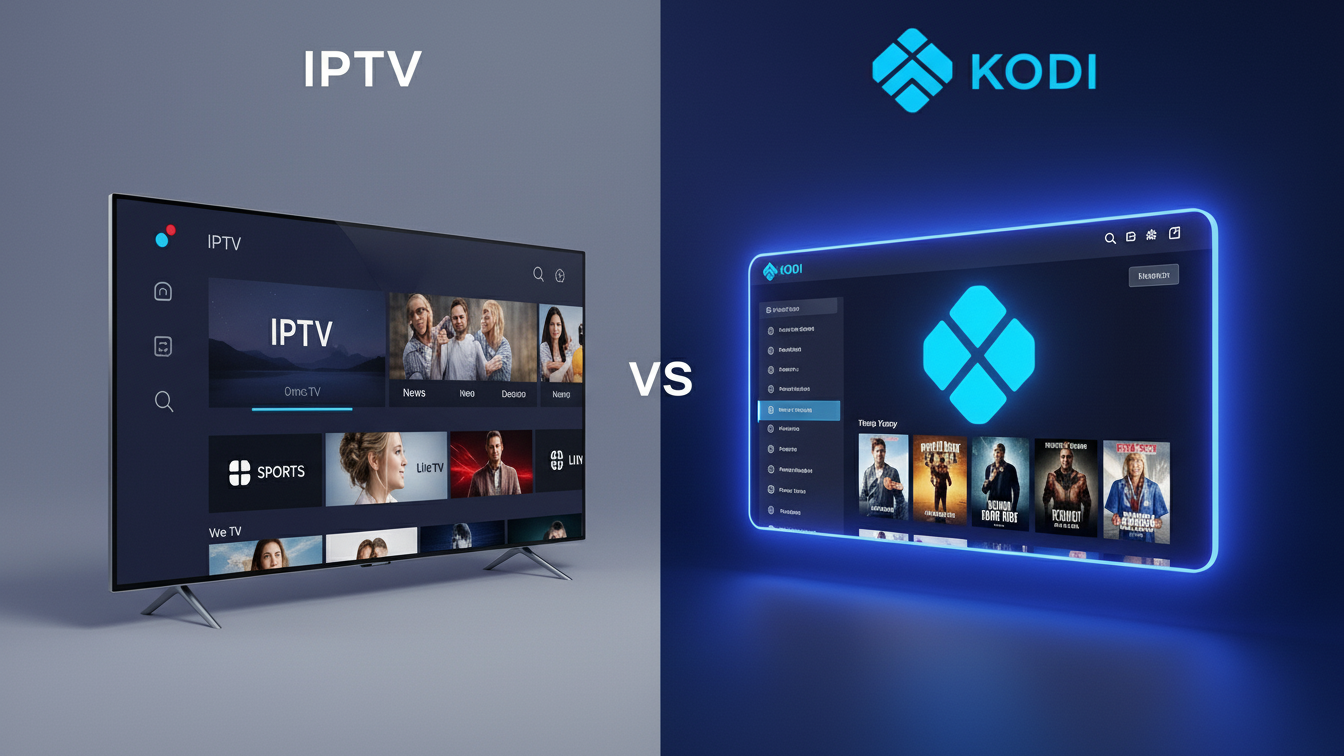
The streaming landscape has evolved dramatically over the past decade. What started as a revolution driven by platforms like Netflix and Amazon Prime has expanded into a massive ecosystem of tools, apps, and services that allow users to watch live television, movies, sports, and on-demand content from anywhere in the world. Among the many technologies that have emerged, IPTV and Kodi stand out as two of the most widely used—but also the most misunderstood—solutions. While both enable streaming, they offer fundamentally different experiences, capabilities, and use cases. Understanding these differences is essential for anyone trying to decide which one is the better fit in 2025.
This guide provides a clear, detailed, and fully professional comparison of IPTV and Kodi. Instead of superficial points or generic descriptions, the analysis below breaks down how each technology works, how they perform under real conditions, the advantages they bring, and the limitations many users don’t realize until they start using them. Whether you are a beginner entering the world of online streaming or a long-time user considering alternatives, this article offers the clarity needed to make the right choice.
Table of Contents
- Introduction
- What IPTV Actually Is
- What Kodi Actually Is
- How IPTV Works: Technical but Simple Explanation
- How Kodi Works: Under the Hood
- IPTV vs Kodi: The Real Differences Explained
- Live TV Performance: Why One Clearly Wins
- Movies and Series: A Completely Different Experience
- Sports Streaming Reliability
- International Channel Availability
- Streaming Quality and Stability
- User Experience and Ease of Use
- Setup Complexity and Maintenance
- Device Compatibility in 2025
- Security and Privacy Considerations
- Legal Considerations
- Costs and Long-Term Value
- When IPTV Makes More Sense
- When Kodi Makes More Sense
- Using IPTV and Kodi Together
- Final Verdict
- SEO-Optimized FAQs
1. Introduction
Online streaming has become the default way people consume entertainment. Cable and satellite subscriptions are declining worldwide, while consumers increasingly seek flexible, on-demand, high-quality alternatives. In this environment, IPTV and Kodi have gained massive popularity. But comparing them is not as simple as asking, “Which one is better?” They are two very different solutions designed for different types of users.
IPTV is typically chosen by people who want a modern version of cable—thousands of live TV channels, organized categories, stable playback, and dedicated apps. Kodi, on the other hand, is preferred by users who want deep control, customization, and an extensive library of on-demand content through community-developed addons. Each platform has strengths and weaknesses that become clear only when viewed through the lens of real-world usage.
This article analyzes both technologies from every angle to help readers determine which one aligns with their streaming habits in 2025.
2. What IPTV Actually Is
IPTV—short for Internet Protocol Television—is a method of delivering live TV channels, movies, and on-demand programs over an internet connection rather than through traditional broadcast or satellite systems. In practice, this means that instead of tuning into channels the old-fashioned way, you receive the stream directly from servers through apps like IPTV Smarters, TiviMate, iMPlayer, Smart IPTV, and dozens of similar interfaces.
What makes IPTV appealing is its structure. Channels are delivered in an organized, cable-like format, complete with categories such as sports, entertainment, news, movies, kids, and international content. Many IPTV services now include tens of thousands of channels and VOD files, making them far richer in content compared to traditional cable.
Unlike platforms such as Netflix, IPTV providers typically do not produce their own content. Instead, they aggregate channels and distribute them to subscribers. The quality and stability depend heavily on the provider’s servers, bandwidth, and streaming architecture. The result is a modern, flexible cable-like experience available on almost any device.
3. What Kodi Actually Is
Kodi is an open-source media center—not a streaming service. It does not come with channels, movies, or shows built into it. Instead, it provides a powerful framework that allows users to install third-party addons, repositories, and builds that access online streaming links from various sources.
At its core, Kodi is a highly sophisticated media hub designed to organize, play, and manage digital content. It excels at library management, customization, theming, and integration with external services like Real-Debrid, Trakt, and premium scrapers. When addons are installed, Kodi becomes a gateway to enormous libraries of movies, series, documentaries, and niche content, often aggregated from multiple streaming sources.
The major difference between Kodi and IPTV is control. Kodi gives users full control and customization. IPTV gives users simplicity. Kodi requires technical knowledge and patience, while IPTV is plug-and-play.
4. How IPTV Works: Technical but Simple Explanation
To understand IPTV clearly, it helps to simplify the technical layer. IPTV providers maintain powerful servers that encode live television feeds and deliver them to users in formats such as M3U playlists, Xtream Codes, or MAG portal addresses. These formats act as a gateway into the provider’s channel database.
When a user logs into an IPTV app with their subscription credentials, the app fetches the channel list from the server. Clicking on a channel sends a request to the IPTV server, which then streams the video feed directly to the device.
The quality depends on:
• The provider’s server performance
• The user’s internet connection
• The app being used
• Server load during peak times
Modern IPTV setups have become extremely optimized, offering 1080p and 4K streams with minimal buffering. This makes IPTV ideal for users who want a stable, predictable live TV experience.
5. How Kodi Works: Under the Hood

Kodi operates in a radically different way. Kodi itself is just a media interface. The real power comes from addons, which act as scrapers. A scraper is a tool that searches the internet for available streaming links and organizes them into a playable format inside Kodi.
When a user selects a movie in Kodi, the addon searches dozens of online sources and returns multiple streaming options. The user chooses one, and Kodi begins playback. Because Kodi relies on publicly available sources, links vary in quality, longevity, and reliability.
This means Kodi often offers more variety, more content, and deeper customizability—but it also means links can break, addons can go offline, and users may have to troubleshoot issues more often. Kodi rewards tech-savvy users but can confuse beginners.
6. IPTV vs Kodi: The Real Differences Explained
Although both technologies allow streaming, they serve two fundamentally different purposes. IPTV is designed for live TV reproduction, mimicking the experience of cable with channels that open instantly and remain stable. Kodi is designed for on-demand entertainment, where the user chooses what to watch and the addon fetches it from the internet.
The way these platforms deliver content differs too. IPTV delivers streams directly from a provider’s servers. Kodi pulls streams from multiple public sources. IPTV is structured, organized, and consistent. Kodi is flexible, customizable, and unpredictable.
Understanding this distinction removes a lot of confusion. IPTV is a service. Kodi is a platform.
7. Live TV Performance: Why One Clearly Wins
When comparing IPTV and Kodi for live TV, IPTV wins decisively. Thousands of users have tested both, and the consensus is clear: IPTV provides a smoother, more stable, and more reliable live TV experience.
Live TV requires a consistent, uninterrupted stream. IPTV providers use dedicated servers with optimized bandwidth for this exact purpose. The streams open quickly, switch instantly between channels, and remain accessible throughout the day.
Kodi does offer live TV through certain addons, but reliability is inconsistent. Links change frequently, servers disappear, and streams can buffer or shut down unexpectedly. Kodi’s live TV addons cannot compete with IPTV servers engineered specifically for real-time playback.
For sports events, IPTV is vastly superior.
8. Movies and Series: A Completely Different Experience
When it comes to on-demand movies and TV shows, the situation reverses. Kodi is often far superior due to the nature of its addons, which scrape links from hundreds of online sources.
A single Kodi addon can provide dozens of links for the same movie in multiple resolutions and formats. Users can choose 1080p, 4K, HDR, or even streams with subtitles embedded.
IPTV providers often include VOD libraries, but the quality and size of these libraries vary significantly. Some providers have extensive, well-updated VOD sections; others have minimal or outdated selections.
Kodi’s variety, flexibility, and community support make it a better choice for users who prioritize movies and binge-watching.
9. Sports Streaming Reliability
Sports streaming is one of the most demanding tasks for any streaming platform. Viewers expect live, uninterrupted coverage, especially for premium events such as football leagues, UFC, boxing, NBA, and Formula 1.
IPTV has become the preferred choice for sports fans because most IPTV services dedicate entire servers to sports channels. These streams are optimized for real-time playback and are less likely to buffer during peak match times.
Kodi sports addons do exist, and some are excellent, but they rely on scrapers and external hosting sources that may be unstable. Streams can go offline, quality can fluctuate, and finding a working link during a big match can be frustrating.
For sports, IPTV is the superior solution.
10. International Channel Availability
One of the biggest advantages of IPTV is the sheer volume of international channels it offers. IPTV providers typically include channel lists from dozens of countries, covering nearly every region. This makes IPTV the go-to choice for expatriates, multilingual households, or users who want access to foreign entertainment.
Kodi does not focus on international channels. While some addons offer limited international options, they are nowhere near as comprehensive or consistent as the channel lists provided by IPTV.
Users who want global access almost always choose IPTV.
11. Streaming Quality and Stability
Quality and stability are essential in streaming. IPTV, being server-based, offers consistent quality. Most IPTV services provide HD and Full HD streams, with many now offering 4K channels, especially for sports and premium networks.
Kodi’s quality depends heavily on the sources scraped. Some links may be excellent, while others may buffer or drop. Real-Debrid and other premium link services significantly improve Kodi’s quality, but they add another layer of setup.
For the smoothest experience, IPTV performs better.
12. User Experience and Ease of Use
The user experience differs significantly between IPTV and Kodi. IPTV apps are designed for simplicity. Once the user logs in, the channels appear in organized categories. Navigation is intuitive, and even beginners can use IPTV comfortably.
Kodi has a steeper learning curve. The interface is more complex, and installing addons requires following steps that may be confusing for non-technical users. However, once fully configured, Kodi offers a rich, customizable, and visually immersive experience unmatched by IPTV apps.
In short: IPTV is easier. Kodi is more customizable.
13. Setup Complexity and Maintenance
IPTV setup takes minutes. Users simply install an app, enter login information, and begin watching. No additional configuration is required.
Kodi setup can take significantly longer. Users need to install repositories, addons, scrapers, services like Real-Debrid, and potentially custom builds. Addons require regular updates, and links may stop working, forcing users to install new or alternative addons.
For users who do not want maintenance, IPTV is the better choice.
14. Device Compatibility in 2025
Both IPTV and Kodi work on most major platforms, including Android TV, Firestick, smartphones, Windows, macOS, and more.
However, Kodi is heavier and requires more processing power. On older or weaker devices, Kodi may lag or crash, especially when using large builds. IPTV apps are lightweight and optimized for performance, making them a better fit for low-end hardware.
15. Security and Privacy Considerations
Both IPTV and Kodi come with security considerations. IPTV users rely on providers whose servers they do not control. Kodi users rely on addons that fetch content from unknown sources. In both cases, privacy can be a concern.
In both systems, a VPN is highly recommended to protect personal data, hide IP addresses, and avoid ISP throttling.
16. Legal Considerations
Both IPTV and Kodi exist in legal grey zones depending on the country and the source of the content being streamed. IPTV itself is legal, but many providers distribute content without official rights. Kodi is also legal, but many third-party addons access copyrighted content.
Users should always understand the laws in their region before using IPTV or Kodi.
17. Costs and Long-Term Value
IPTV requires a paid subscription, usually monthly or yearly. Prices vary, but most IPTV services are affordable compared to cable.
Kodi is free to use, but users may choose to pay for Real-Debrid or similar services for better streaming links. Even then, costs remain low.
The best option in terms of value depends on user priorities: IPTV costs more but offers stable live TV; Kodi is free but requires more effort.
18. When IPTV Makes More Sense
IPTV is the better choice for users who want a cable-like experience with instant access to live TV, sports channels, and international content, without the need for complicated setups. It provides structure, stability, and ease of use.
19. When Kodi Makes More Sense
Kodi is ideal for users who want access to large libraries of movies and TV shows, love customization, and don’t mind spending time configuring addons. It is unmatched in on-demand content variety.
20. Using IPTV and Kodi Together
Many advanced users combine both solutions. IPTV handles the live elements—news, sports, international channels—while Kodi handles movies, binge-watching, and specialty content. Together, they create a complete streaming ecosystem.
21. Final Verdict
IPTV and Kodi both dominate the streaming world but for completely different reasons. IPTV is reliable, structured, and ideal for live TV and sports. Kodi is flexible, customizable, and exceptional for on-demand entertainment. Instead of comparing them as competitors, it is more accurate to view them as complementary tools. Users who understand their strengths can create a powerful and complete streaming solution in 2025.
FAQs
Is IPTV legal to use in my country?
The legality of IPTV depends entirely on whether the service you subscribe to has the proper broadcasting rights to distribute its channels. In some countries, IPTV services must obtain licenses similar to cable companies, while in others, regulation is still developing. To better understand IPTV legality worldwide, you can review resources from the European Union Intellectual Property Office or the U.S. Copyright Office. If you prefer to explore safe and reputable IPTV options that respect proper rights-holding practices, you can also visit IPTVPut at: IPTVPUT — your internal link.
Is Kodi legal if I install third-party addons?
Kodi itself is a completely legal open-source media center. However, third-party addons may access content that does not have redistribution permissions. According to the Kodi Foundation’s official statement, Kodi does not endorse or support piracy or unofficial streaming sources. Always use addons from verified repositories and understand the laws in your country regarding streaming copyrighted material.
Which platform is safer: IPTV or Kodi?
Both IPTV and Kodi come with security considerations. IPTV streams your content directly through the provider’s servers, meaning your IP address is visible unless you use a VPN. Kodi, on the other hand, relies heavily on third-party links sourced from the internet, which can expose users to malware or unsafe websites. Cybersecurity experts, including those from Kaspersky, recommend using a trusted VPN on both platforms to protect your identity and prevent ISP throttling or data exposure.
Interested in IPTV Lifetime?
Get premium IPTV lifetime access with 25,000+ channels and 26,000+ movies. Contact us to learn more about our lifetime IPTV subscription plans.
View IPTV Lifetime Plans